
By: Brian Evans
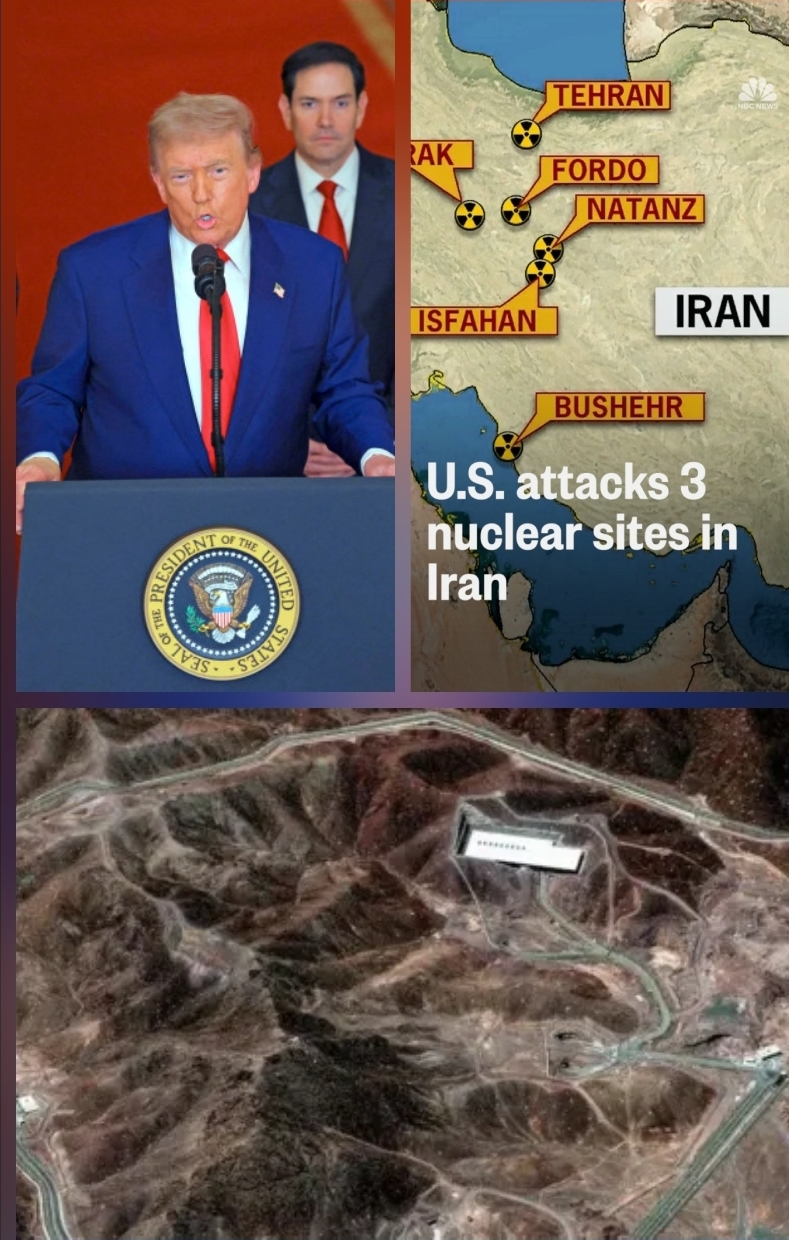
In a world increasingly threatened by radical regimes and emboldened adversaries, President Donald J. Trump once again demonstrated bold, unwavering leadership today by authorizing targeted military strikes against Iran’s nuclear sites. This action, while sure to stir global debate, was not only justified—it was necessary. The Islamic Republic of Iran has long proven itself to be the world’s foremost sponsor of terrorism, and this decisive strike sends a clear message: the United States will not sit idly by while rogue nations seek to sow chaos and destruction on a global scale.
Iran’s threat is not hypothetical. Their regime has openly declared its intention to wipe both Israel and the United States off the face of the earth. These are not idle threats made in passing—they are stated goals embedded in Iran’s radical ideology. Iran has funded proxy wars across the Middle East, orchestrated attacks on U.S. ships, taken American hostages, and supplied weapons and resources to terrorist groups such as Hezbollah and Hamas. No responsible leader can ignore this existential threat.While critics often call for endless diplomacy, history tells a different story. Iran was not always our enemy.
Before the 1979 Islamic Revolution, Iran was an ally. But with the rise of Ayatollah Khomeini and the bloody revolution that followed, that relationship turned into one of hatred and hostility. The regime’s first major international act was the hostage crisis—where 52 American diplomats and citizens were held for 444 days. That act of terror marked the beginning of a four-decade-long campaign of violence, repression, and defiance against the West. Even worse, Iran’s regime has not only terrorized its enemies—it has brutalized its own people. Peaceful protestors have been beaten, imprisoned, and killed.
Women demanding basic freedoms have been silenced. Yet, in recent years, American leadership failed to challenge this tyranny. Under President Obama, the United States rewarded Iran’s aggression with pallets of cash in a flawed nuclear deal, naively believing this would moderate their behavior. Instead, Iran funneled that money back into terrorism, missile development, and regional destabilization.
The Biden Administration continued this pattern of appeasement, unfreezing billions of dollars and offering diplomatic overtures, even as Iran escalated threats against Israel and American interests. That weakness only encouraged Tehran’s aggression.
Only two modern presidents have consistently stood against such evil: Ronald Reagan and Donald Trump. Reagan defeated the Soviet Union not through appeasement, but through unwavering strength. Trump followed the same principle—peace through strength. From eliminating Iranian terror chief Qassem Soleimani to brokering the Abraham Accords, Trump has shown that resolve—not retreat—secures peace.Today’s strike on Iranian nuclear facilities is a continuation of that legacy. It ensures that Iran does not acquire a nuclear weapon capable of threatening our allies or our homeland. It sends an unambiguous message: the United States will not wait for a mushroom cloud to justify action. We will act decisively to protect life, liberty, and global stability.
The Constitutional Authority Behind the Strikes
Critics may question the legality of today’s strikes, but the Constitution provides the President with clear authority under Article II, Section 2, which names the President as “Commander in Chief of the Army and Navy of the United States.” This role allows the President to take immediate military action to protect American interests, citizens, and allies—especially when there is no time for prolonged Congressional debate.
While Congress retains the sole power to declare war (Article I, Section 8), the President has historically—and lawfully—ordered limited military actions without a formal declaration of war when rapid response is necessary. The War Powers Resolution of 1973 reinforces this by requiring the President to notify Congress within 48 hours of deploying military forces into hostilities and limits military engagement to 60 days (plus a 30-day withdrawal period) unless Congress authorizes a longer commitment.
President Trump, as in previous limited strikes such as the 2017 Syria airstrikes, acted within the scope of his constitutional authority. His responsibility as Commander in Chief includes responding to imminent threats and ensuring the national security of the United States without waiting for bureaucratic delays that could cost lives or embolden enemies.
Choosing Principle Over Politics: Leading with Courage in a Dangerous Time
President Trump could have taken the politically easy path—issued a statement, held a press conference, and avoided the tough decisions that risk controversy or criticism. That would have kept his supporters united and spared him political fallout. But instead, he chose to do what he believes is right: to act decisively to protect America and its allies. In a time when terrorism has become all too common, and with Iran inching closer to developing a nuclear weapon, the stakes are simply too high for hesitation. President Trump understands the cost of inaction and refuses to gamble with American lives.Standing with Our Military and Our Mission
We are deeply grateful for the bravery, professionalism, and courage of our United States service members. This strike was not just a show of military might—it was a defense of peace, liberty, and global stability. It was a line drawn in the sand: the United States will not be intimidated by regimes that sponsor terror and threaten genocide.
President Trump has once again reminded the world that America does not lead from behind. He leads with strength, and the world is safer because of it. We continue to pray for our military, for the President, and for a lasting peace.May God bless our troops, and may God bless the United States of America.
 Brian Evans for Joplin